



















The elephant outside the room

It’s time for an honest conversation on product damage costs...

Recent global events have once more highlighted how dependent New Zealand is on the fast, efficient, and effective movement of goods around the country. As we look to reduce transport costs it’s now more important than ever to ensure every pallet reaches its destination in the best possible condition.

Kiwi companies are looking to cut costs in how they pack and send goods. In times like this it is often easy to undertake a procurement review of cost per roll of stretch wrap or to assess cheaper options when replacement wrapping machinery becomes necessary.

Creating positive change requires a big picture perspective however. And it starts with a clear view on the effects of product damage and an honest chat about how we can work together to fix it.

Time is money. Reputation is money. And money is money, too.

Many companies see pallet damage costs as a necessary evil.

Even consistent damage is viewed as unavoidable due to the various stresses that goods experience between distribution hub to delivery destination. The spreadsheet will share news of replacement and freight costs.

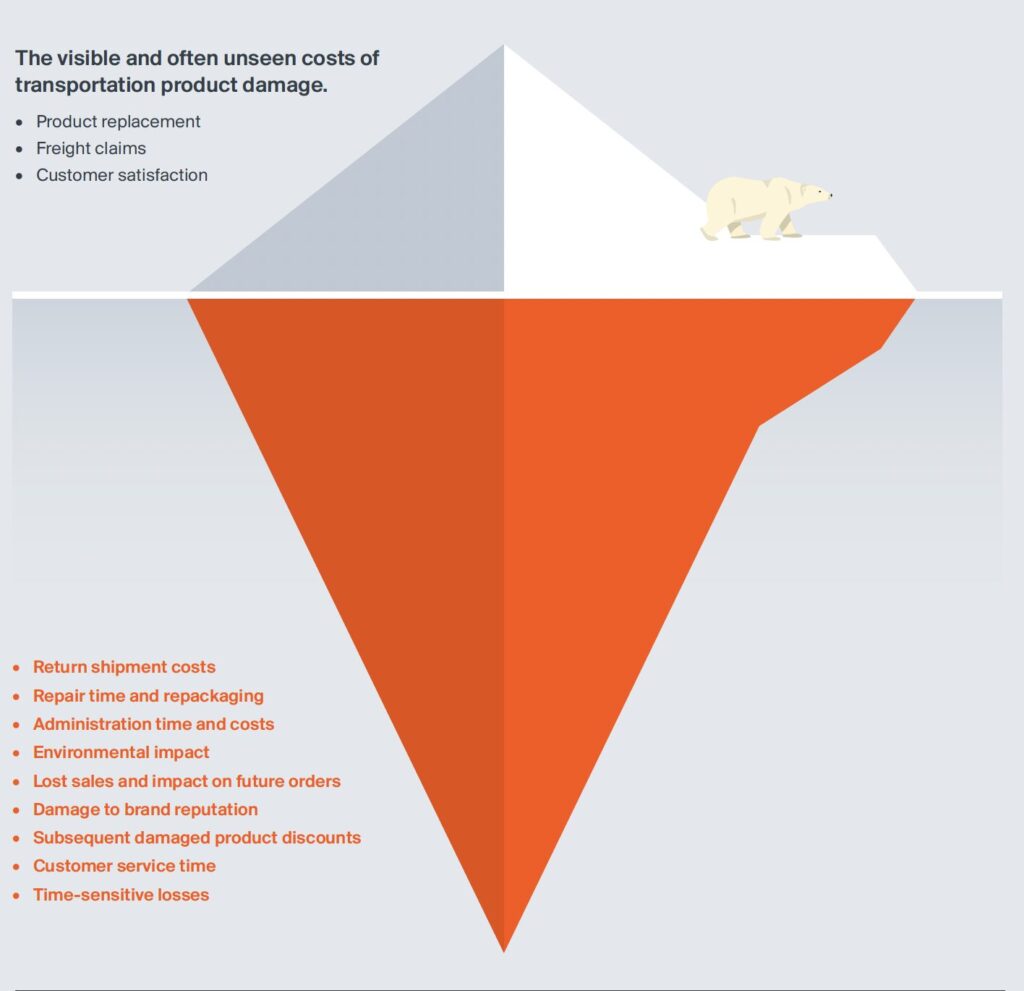
Yet the impacts of damage will run far deeper. Packaging time, brand reputation, carbon impacts, and customer satisfaction are just some of the negative consequences of damage.

The bad news?

Putting an actual cost on product damage in transit is difficult. The figures in New Zealand aren’t readily available. No business wants to publicly acknowledge inefficiency and waste if they can help it.

Neither do different divisions within a company often have the time or information necessary to understand the size of the problem. Siloed decisions can be made in this vacuum. Yet anything from a change in a pallet wrapper’s settings to increase wrap use to a procurement choice that saves 50 cents a roll will impact areas beyond the silo it is made in.

To understand the size of the issue it’s important to consider all the potential consequences. And to have all the relevant information in front of key decision makers.

“Putting an actual cost on product damage in transit is difficult.”

The good news? 

Helping our customers bind together and send secure is what drives us forward, and preventing product damage is an issue that’s close to our heart.

Anyone can import containers of cheap stretch wrap or make bold sustainability claims. It takes technical insight, industry experience, and scientific expertise to ensure product, process, people, and pallet packaging are working together correctly. This starts with the getting the right measurements.

The right metrics.

It is clear product damage equals environmental damage. Yet often, in the rush to reduce plastic stretch wrap, the focus is on the type of plastic stretch wrap being used. New biodegradable products often enter the market with considerable fanfare yet fail to protect products from damage. They simply don’t work.

Good sustainability measures start with a proper on-site analysis and exact measurements. Nobody wants excessive film use – with pallet protection it should be a case of no more, no less.

One of the best ways to cut down on both the cost and environmental impact of transportation is to work on reducing the need for it. More product returns equal more fuel being used on the roads, more potential landfill, more overall wastage and environmental impact.

It’s why our key focus is always on sending products once – and once only.

“The pallets should be of sufficient strength to withstand the load they carry satisfactorily and should be in a good state of repair. Full pallets must be constructed and bound so they are able to withstand a horizontal acceleration of 0.5g (half weight of pallet). If there is any doubt concerning this capability then a simple tilt test should be carried out. The pallet must be able to withstand a sideways tilt angle of at least 26° before showing signs of any significant distortion.”

NZTA road code

“As much as 11% of unit loads arriving at a distribution center have some level of case damage. While damage in-transit is often thought of as a logistics problem, the root of the problem may actually be in your packaging design, material handling policies, or storage procedures, long before transportation gets hold of the product.” Packaging Digest.

If you’d like to book an on-site packaging assessment with one of our containment experts get in touch today.

More on this topic

Production and shipping costs
Price-increase-article-pic
The incredible situation the world now finds itself in feels like something of a fever-dream. For two years we’ve been dealing...
Read more
What is the real cost of pallet wrap?
Pallet wrapping brochure - Universal Packaging
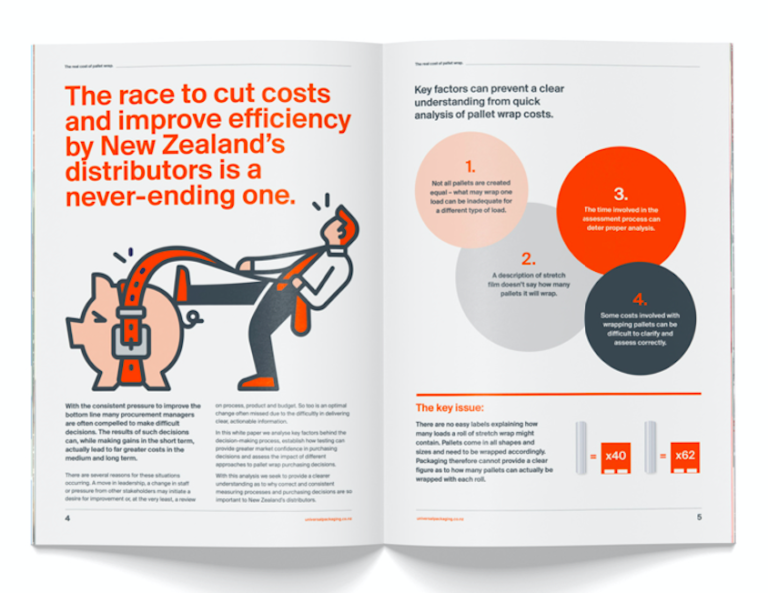
Many purchases are made without understanding the bigger picture of ‘true’ value. It is true of shoes. It’s true of property....
Read more
At your service: Ensure your wrapper is in the right place
Kevin Bills Photography
To make sure your DC is cooking with gas, here are a few tips for locating your wrapper, and some pointers about the pitfalls...
Read more

Request a quote

Please fill in the form below and our team will be in touch.

Please note: We are a New Zealand-based wholesaler and only distribute within New Zealand.

The elephant outside the room

Thanks very much!

Download your brochure here.

Download now

Please fill in the following form to download the brochure pdf.